A beginner’s guide, illustrated with my Sweet Afternoon design.
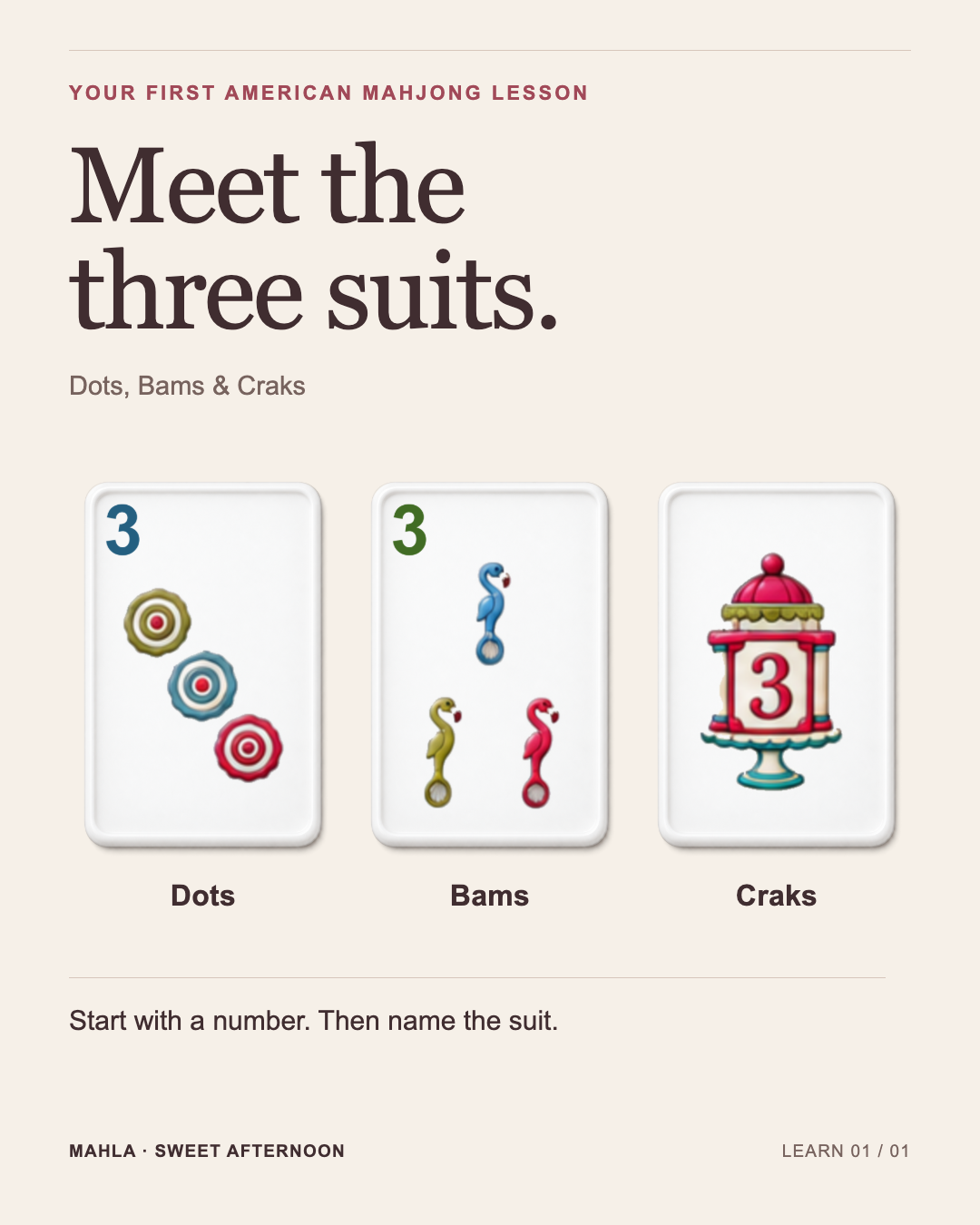
New to American Mahjong? Start with three tile families: Dots, Bams and Craks. Each numbered suit runs from 1 to 9. You do not need to learn a winning hand today—just practice recognizing and naming a few tiles.
1. Dots: find the round motifs
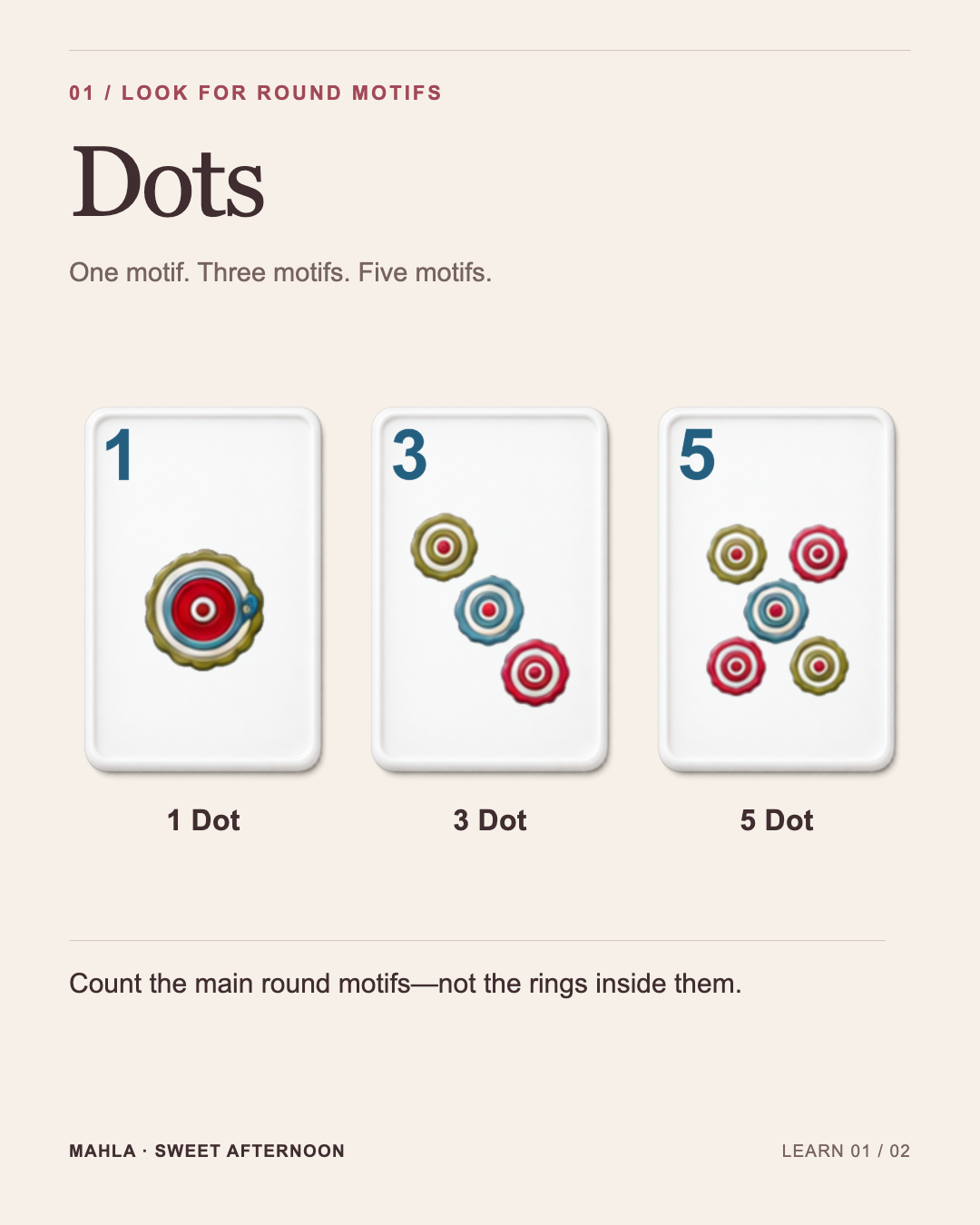
Look at the 1, 3 and 5 Dot examples. In Sweet Afternoon, the round, tea-table-inspired motifs make this family easy to compare. Count the main motifs, not the colored rings inside each one: three round motifs make this example a 3 Dot. Say it aloud: “three Dot.”
2. Bams: learn this design’s motif
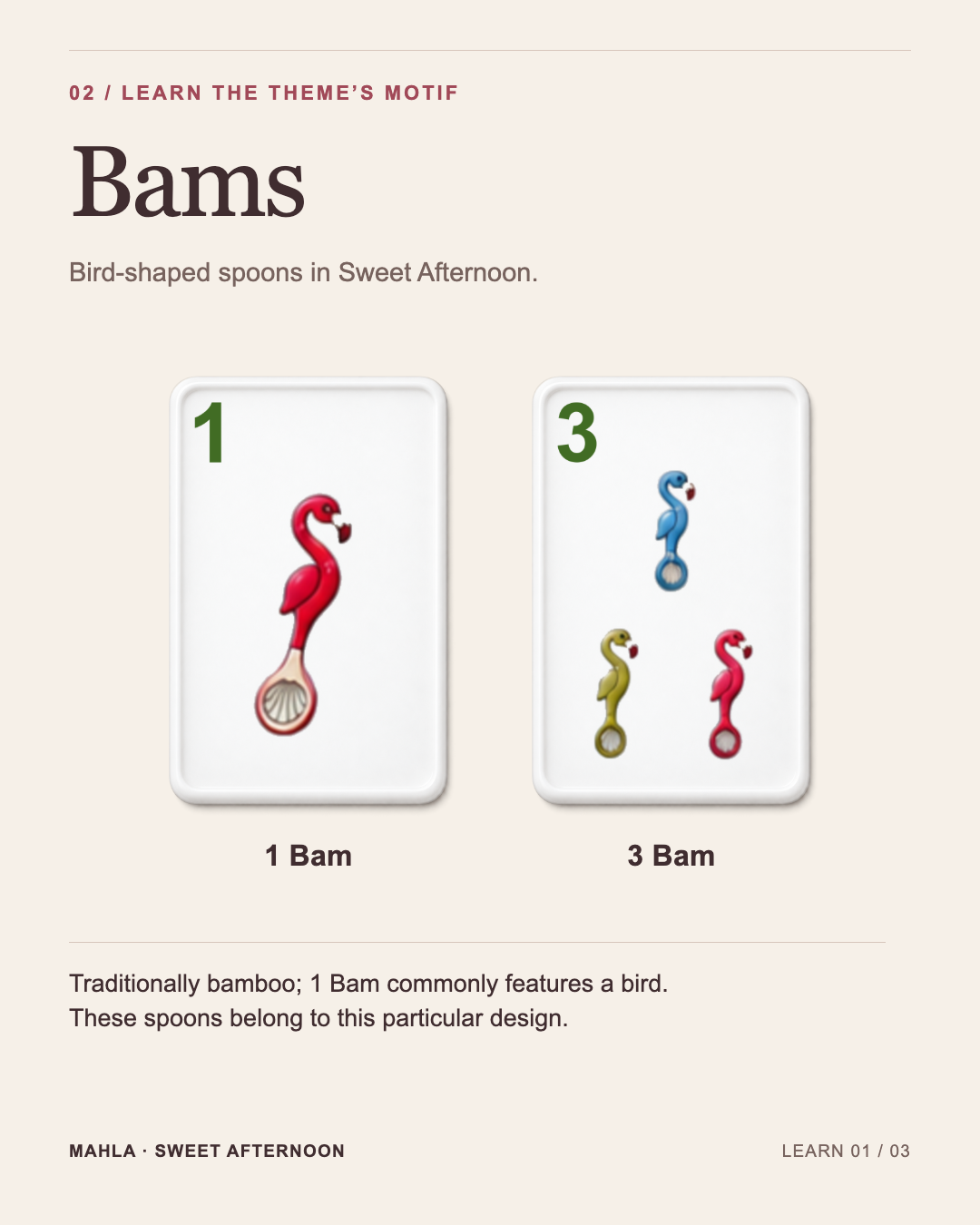
Bams is short for bamboo. Traditional Bam tiles usually show bamboo, with a bird commonly used for 1 Bam. In Sweet Afternoon, bird-shaped spoons are the repeating motif. The tile with three spoons is 3 Bam; the single bird-shaped spoon shown here is 1 Bam. These are features of this design, rather than a rule that every set must use spoons.
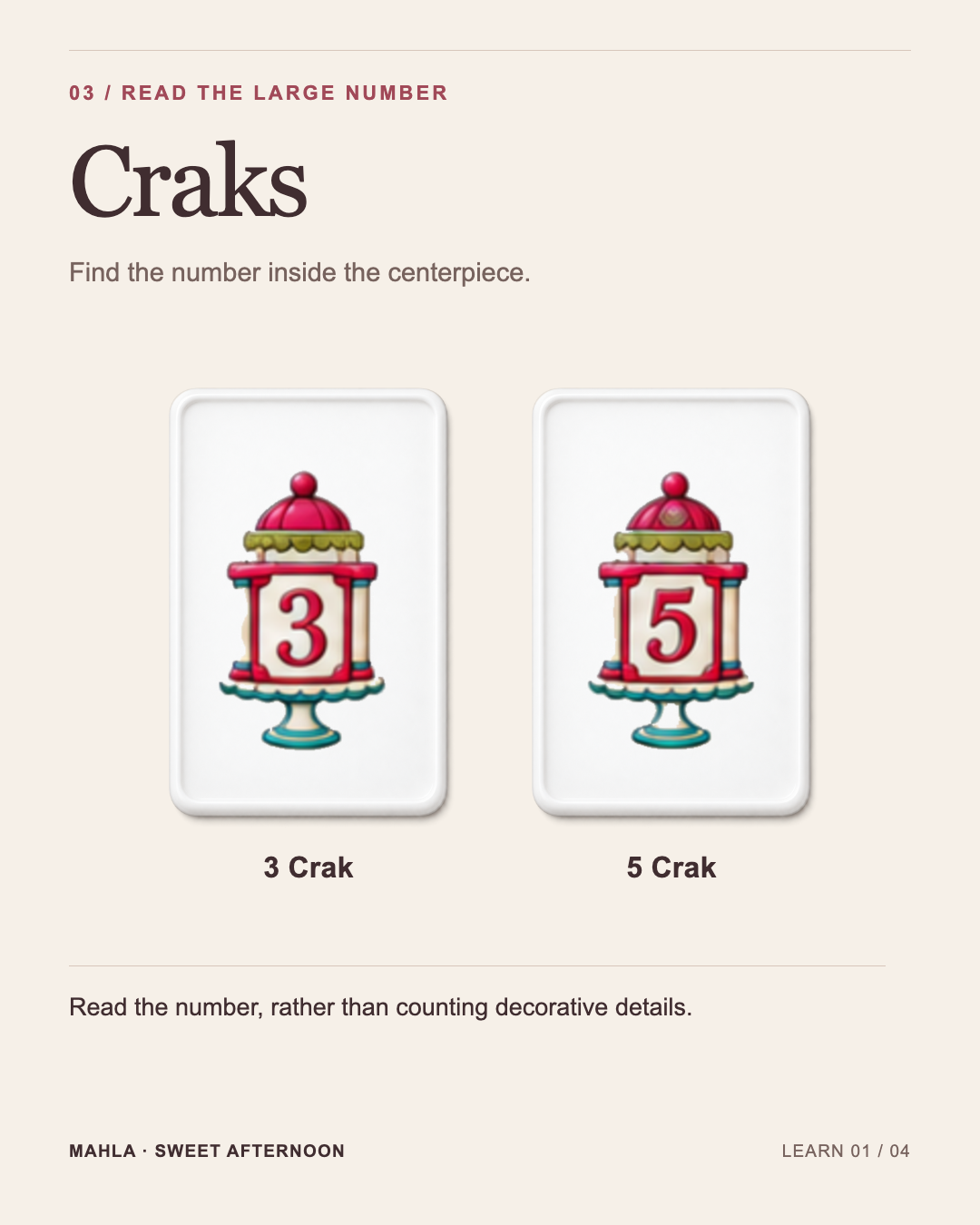
3. Craks: read the number in the centerpiece
Craks is the character suit. In this design, the large number sits inside a decorative centerpiece. Find the 3 and say “three Crak.” Then compare it with the 5 Crak. You read the number in the artwork; you do not count the decorative columns or details.
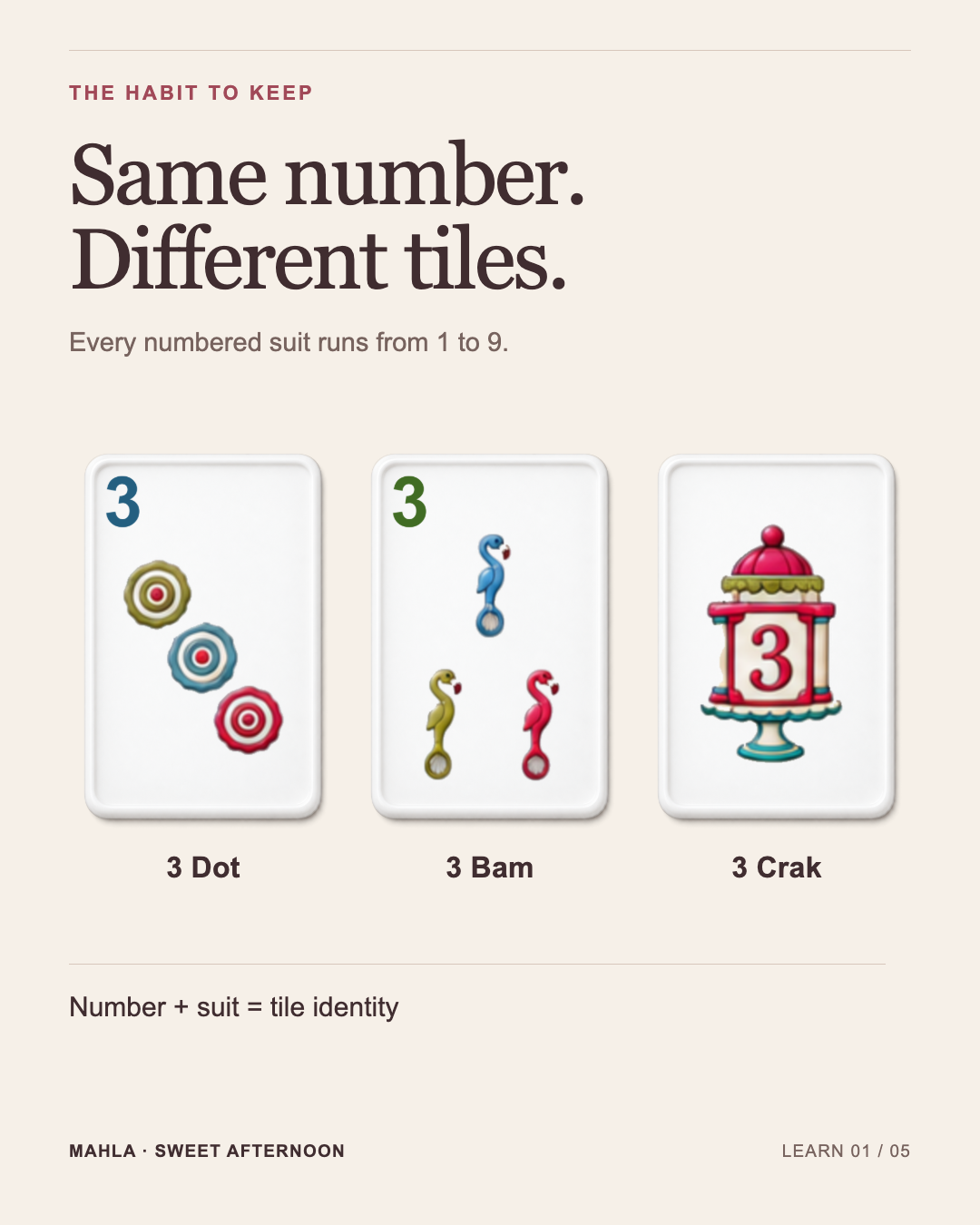
The habit to keep: number + suit
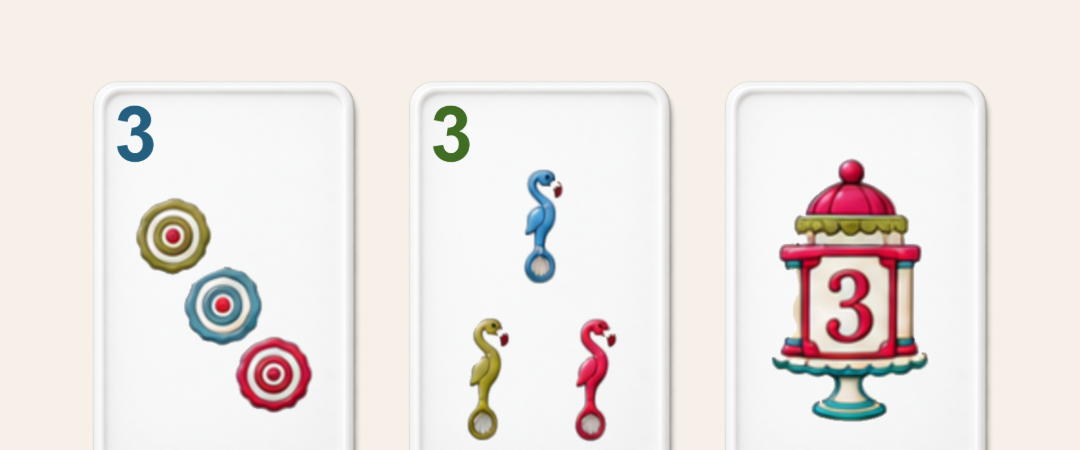
Place 3 Dot, 3 Bam and 3 Crak side by side. All three have the number 3, but each has a different tile identity. Read the number and the suit together. Color can be a helpful cue within a set; learn its motifs too, because artwork and palettes vary between designs.
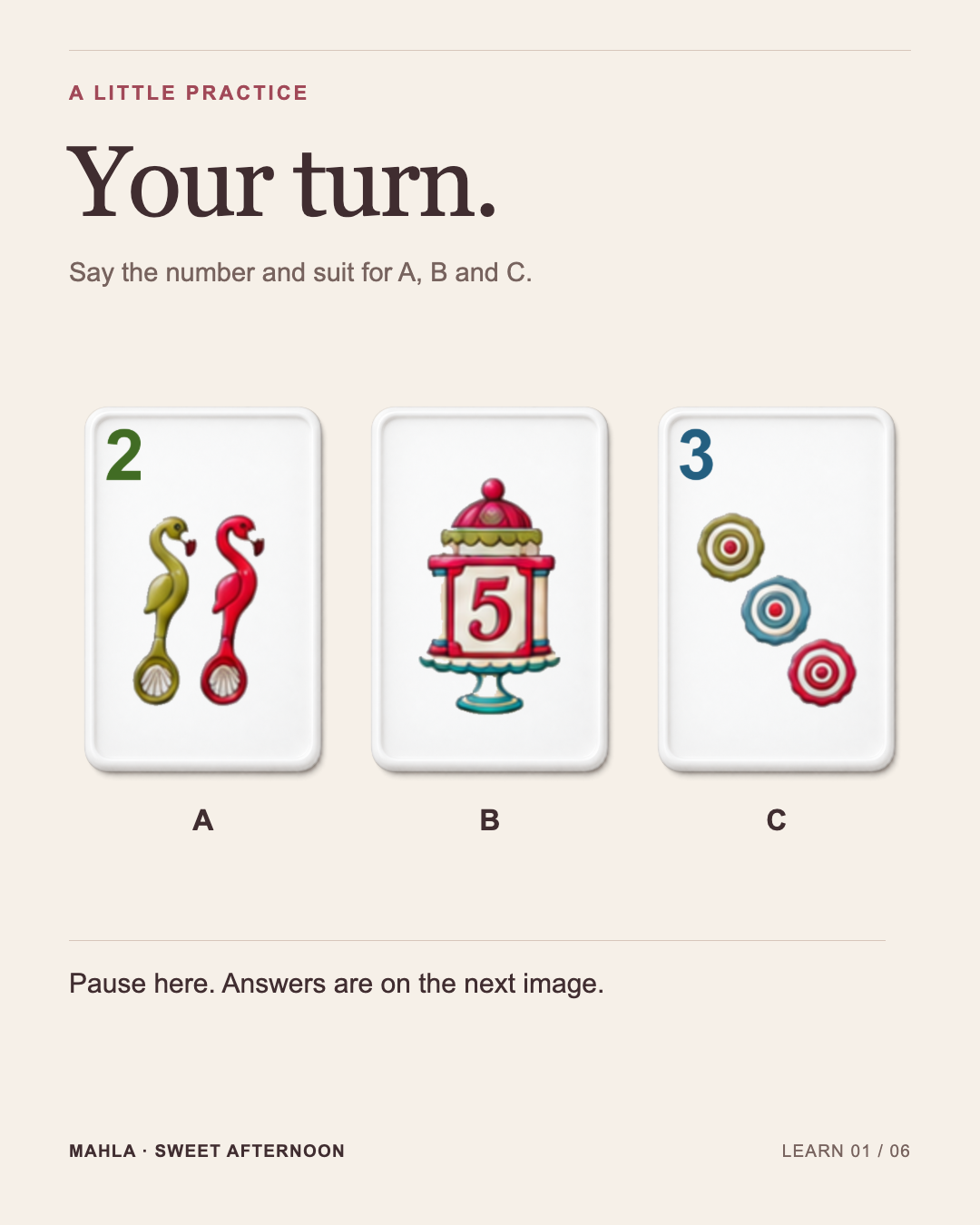
Try it yourself
Look at the practice image before reading the answer. Name A, B and C aloud, using a number and a suit each time.
Answers: A = 2 Bam. B = 5 Crak. C = 3 Dot.
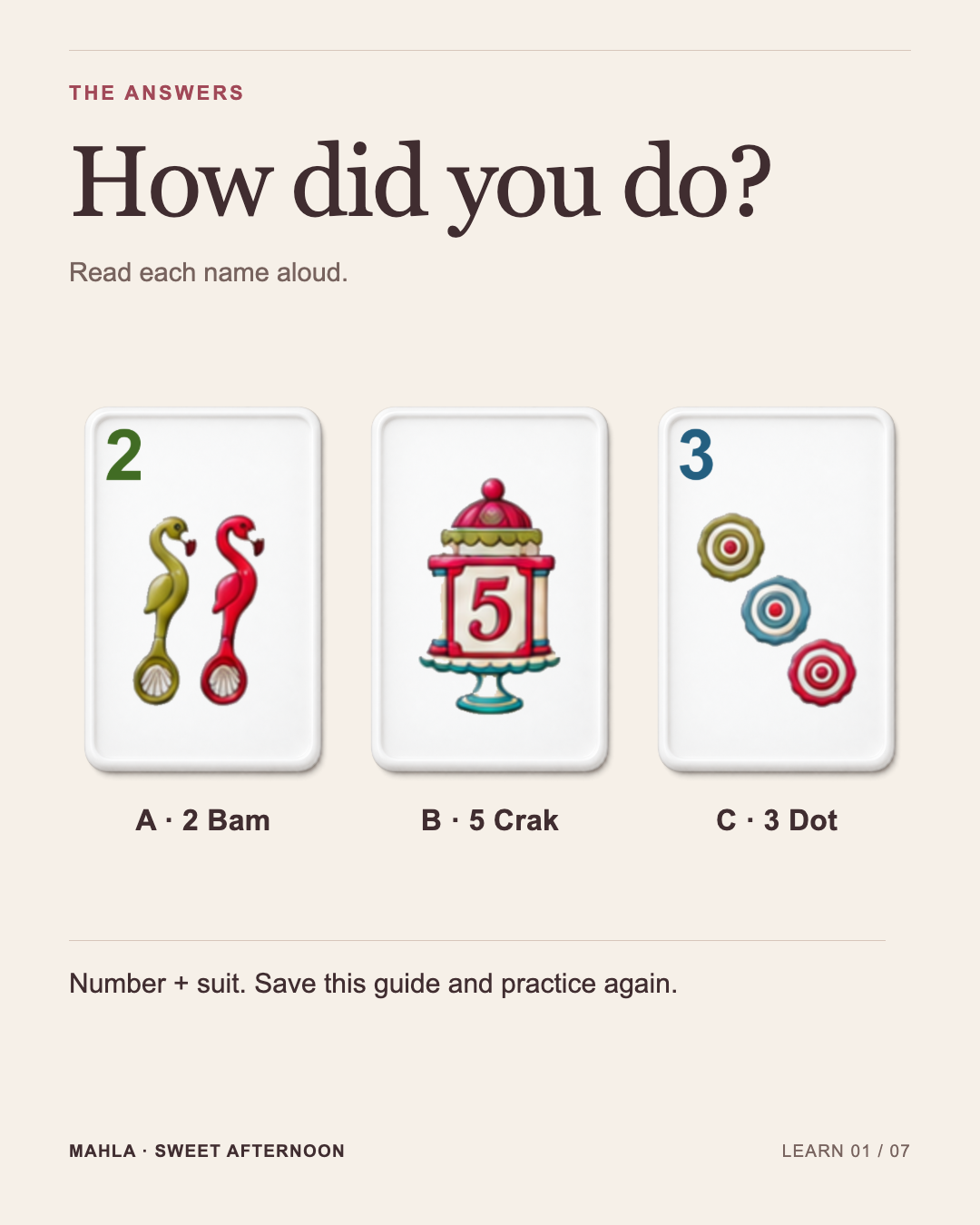
That is enough for your first lesson. Save the guide, come back to the three examples, and see whether you can name them without looking at the captions.
Tile design: Sweet Afternoon by Mahla.
Terminology reference: American Mah Jongg Association Glossary and Bam. Checked 21 October 2026.