
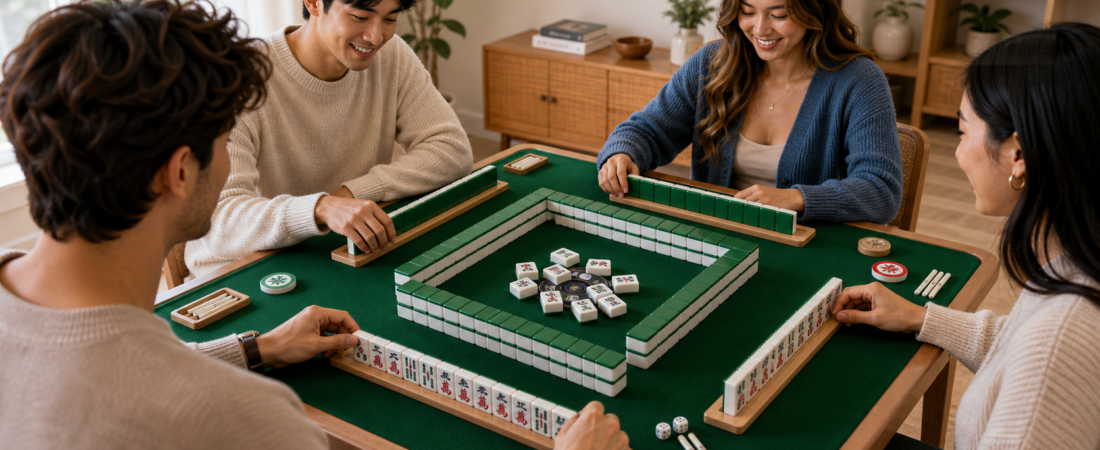
Some games are played because everyone wants to win. Mahjong is different. The winning is part of it, of course, but the real magic starts before the first tile is drawn: friends finding seats, someone pouring drinks, a table mat rolling open, and that small electric feeling that the evening has officially begun.
In the United States, American mahjong has become more than a classic game. It has become a ritual for connection. It gives people a reason to come over, stay a little longer, laugh at mistakes, ask questions, and build the kind of friendships that are hard to schedule in ordinary life.
A Table That Makes Room for Everyone
A good mahjong night does not need to be perfect. It needs a table, four seats, a little patience, and people who are willing to learn together. That is what makes it feel so welcoming. Beginners can sit beside experienced players. Friends can teach friends. A small rule explanation becomes a conversation. A missed tile becomes a laugh. A close hand becomes a memory people bring up the next week.
That is the emotional value of mahjong: it turns learning into belonging. You are not only practicing a game. You are being invited into a rhythm.
Why the Ritual Feels So Good
There is something calming about the physical world of mahjong. The smooth weight of the tiles. The soft sound of a draw. The order of racks, mats, and hands taking shape. In a day filled with screens, a mahjong table feels refreshingly real. Everyone is looking at the same surface. Everyone is sharing the same pace.
That is why American mahjong nights often become more than casual plans. They become weekly anchors. A Tuesday night group. A neighborhood tradition. A birthday activity. A family holiday table. A reason to text, “Are we playing this week?”
A Modern American Social Game
American mahjong has its own personality: racks, jokers, annual cards, table talk, and a style of play that rewards memory, patience, and humor. It feels strategic without being cold. It is competitive, but rarely lonely. Even when you are focused on your own hand, you are still part of the table.
That balance is why the game fits so naturally into modern American life. It can be elegant or casual. It can be played at a country club, in a kitchen, at a vacation house, in a community room, or around a folding table with snacks nearby. The setting can change. The feeling stays the same.
The Joy Is in Coming Back
The best mahjong groups are not built in one night. They are built through repetition. Someone learns the winds. Someone finally understands the card. Someone starts bringing dessert. Someone buys a mat because the table deserves one. Slowly, the game becomes part of the friendship.
That is what makes mahjong such a beautiful gift, too. A set is not just an object. It is an invitation. It says: let us make time, gather people, and create something that can happen again.
Start With One Night
If you are new to American mahjong, do not wait until you know every rule. Start with one table. Invite people who are curious. Keep the mood light. Let the first night be about discovery, not perfection.
The game will teach you. The table will hold the conversation. And before long, what began as a simple plan may become the night everyone looks forward to.