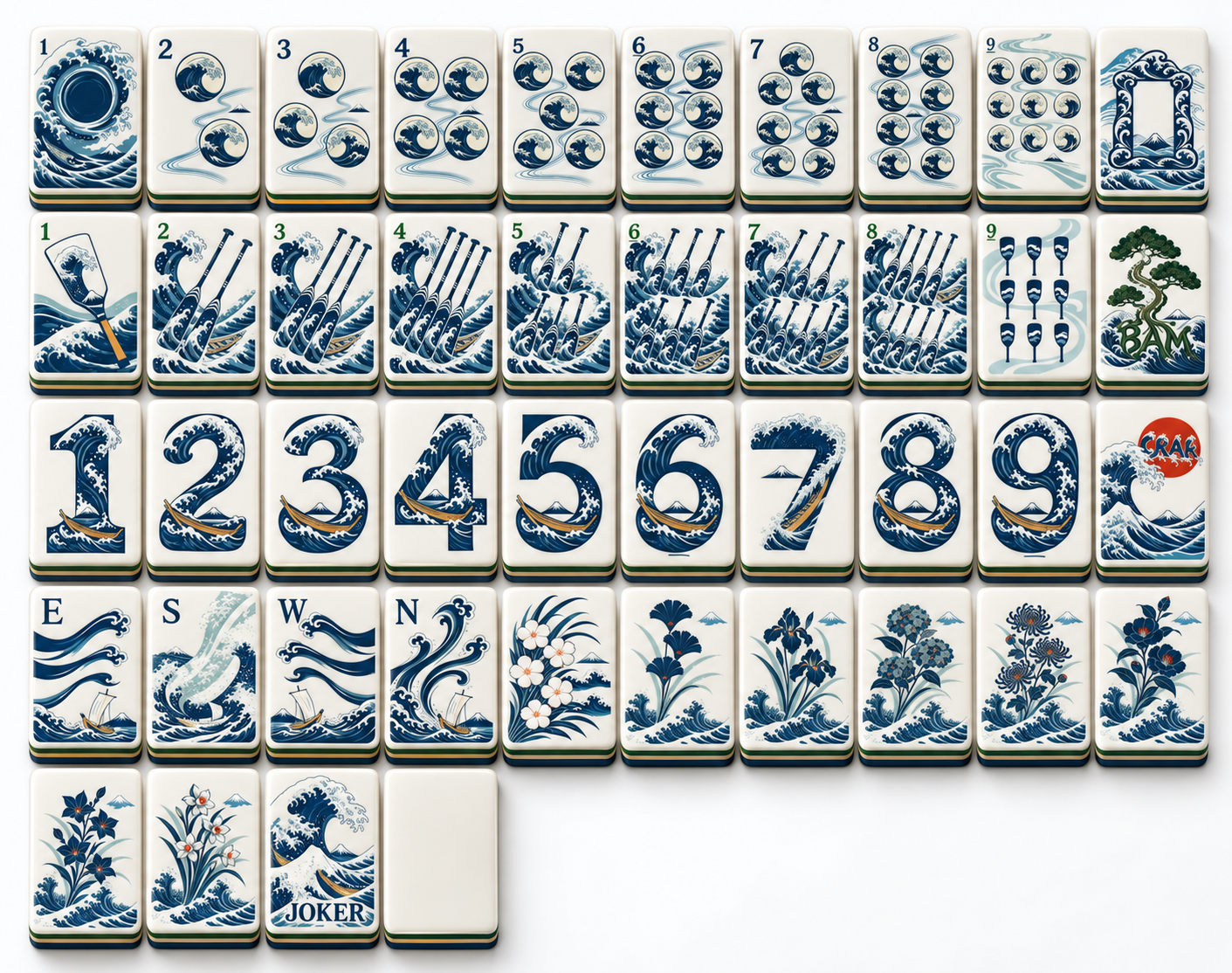
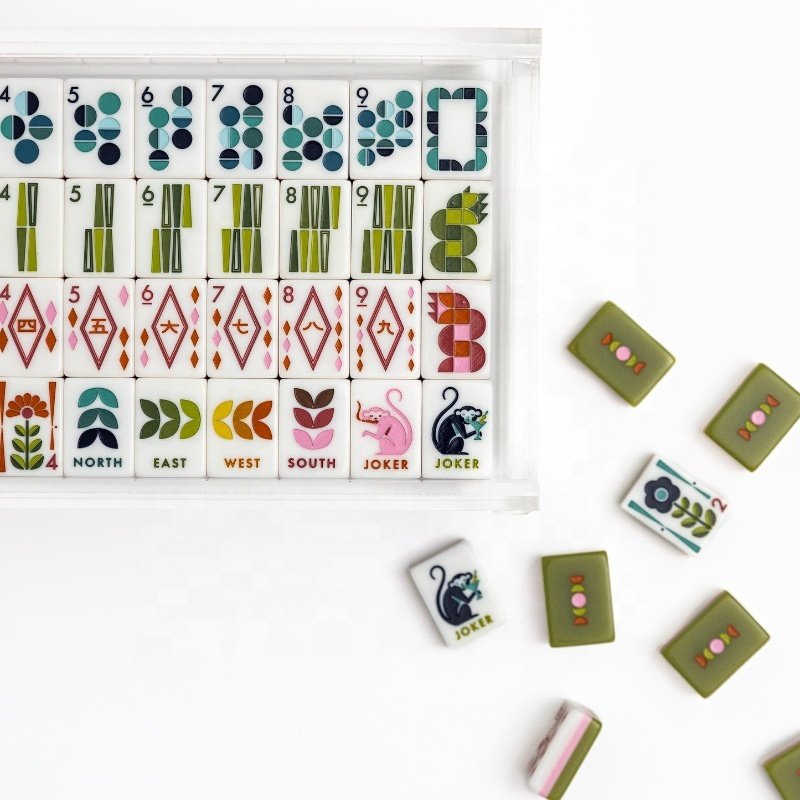
Sometimes—but check the actual tiles before you plan an NMJL-style American Mahjong game. A box described as a Chinese Mahjong set is not a guarantee that it contains every tile you need. The shared suits are a starting point; Jokers, Flowers and the full inventory need a closer look.
If you already own a set, spread it out before buying another one. This guide focuses on whether your equipment can work, rather than comparing every rule in the different Mahjong traditions.
Start with your table’s rules
Ask your host or instructor which version you will play. Chinese Mahjong includes different regional and competition rules. Here, “American Mahjong” means NMJL-style play; this checklist should not be treated as a universal requirement for every Mahjong game.
For NMJL-style play, confirm the card year your group uses as well. An annual card is separate from the tiles and from a general instruction booklet. Our NMJL card guide explains that distinction.
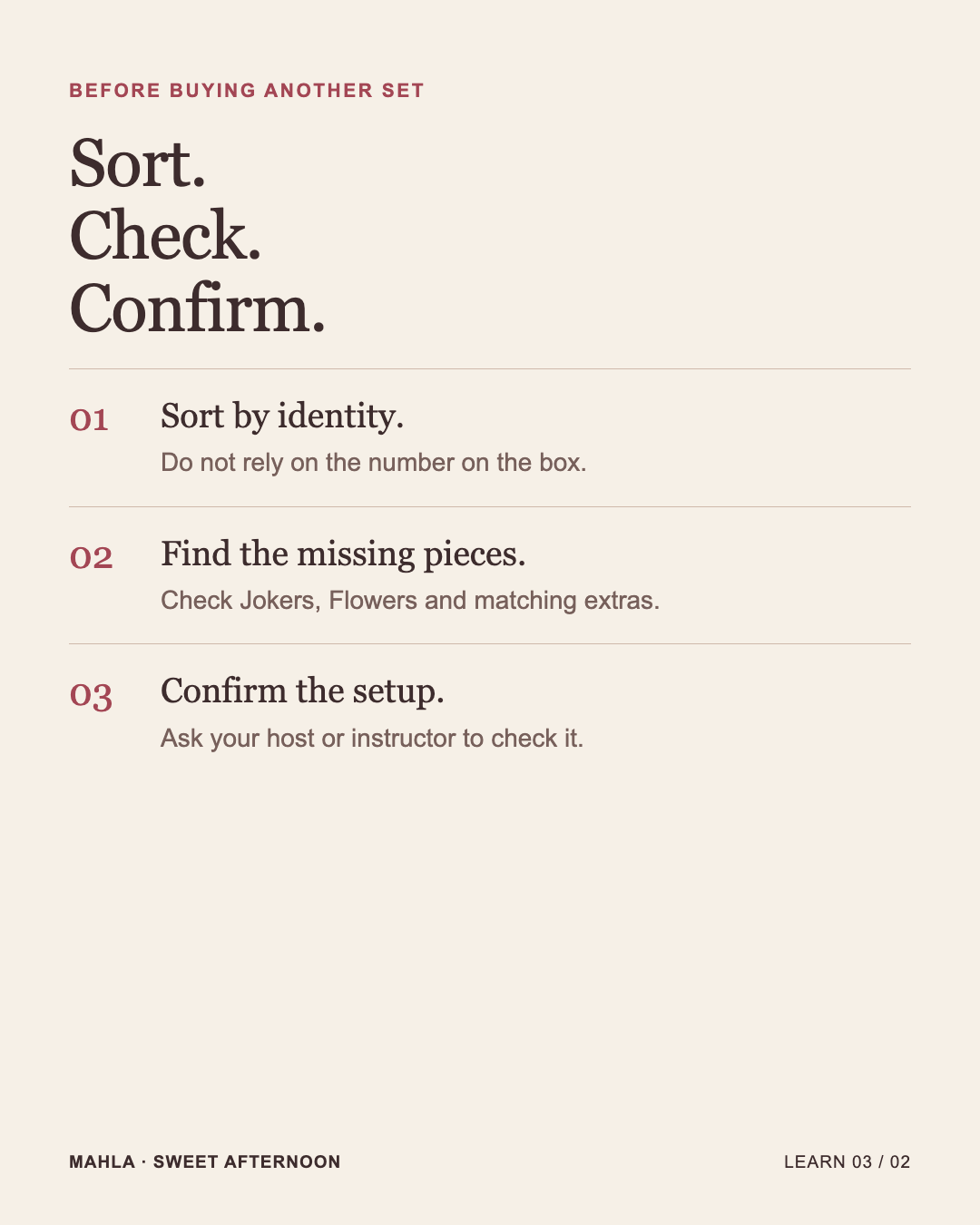
Check identities, then count copies
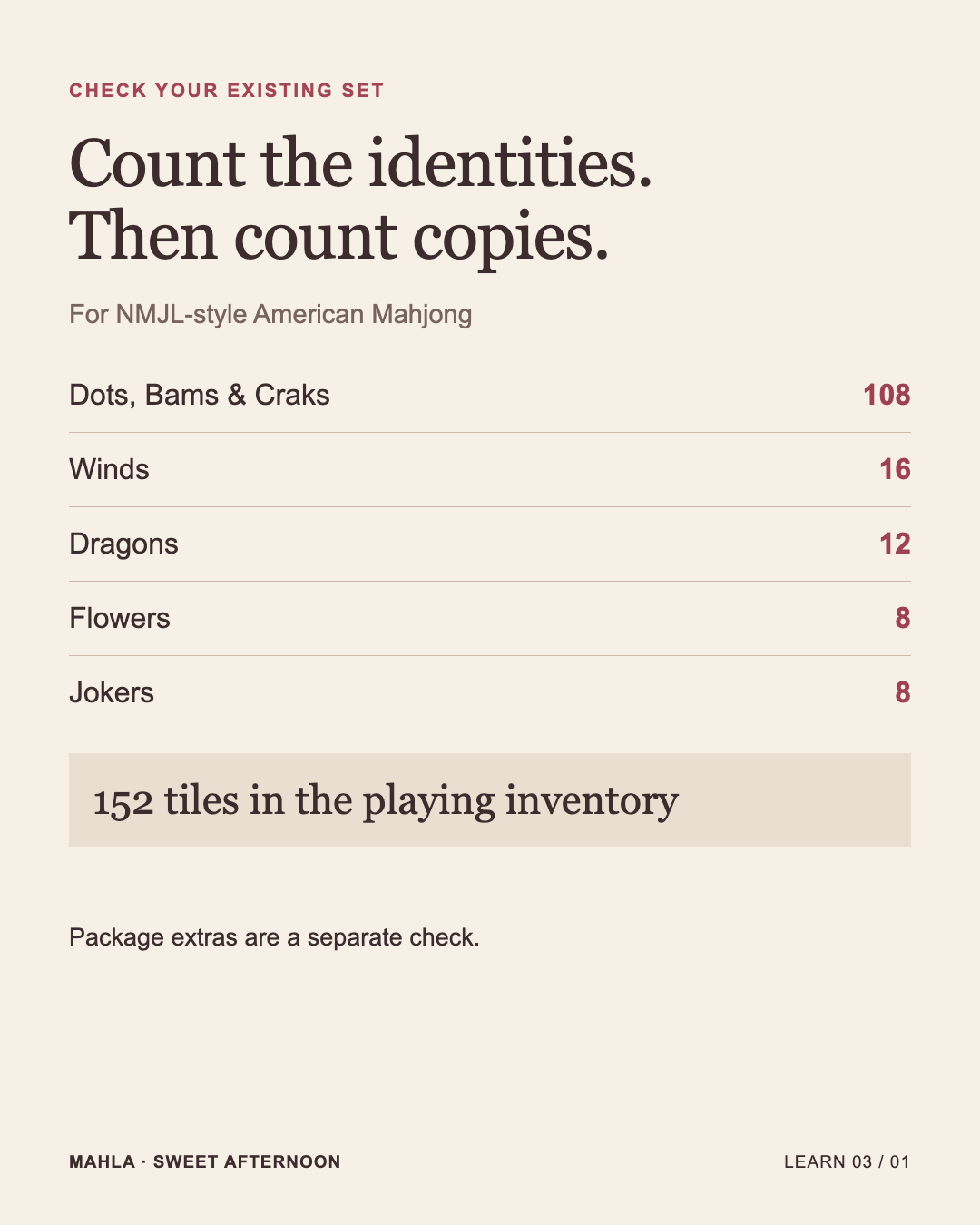
The usual 152-tile American playing inventory is:
- 108 numbered tiles: Dots, Bams and Craks, numbered 1–9, with four copies of each identity.
- 16 Winds: four each of East, South, West and North.
- 12 Dragons: four each of the three Dragon identities.
- 8 Flowers and 8 Jokers.
The American Mah Jongg Association’s rules overview describes the 152-tile game. Count your own set by identity; an attractive box or a familiar total does not tell you what is inside.
Jokers are a key compatibility check
Do not assume that spare tiles or a regional special tile already function as American Jokers. Standard American play uses eight. The Association’s Joker guide notes that suitable extra tiles can be converted using official Joker decals.
A decal changes identification; it does not create a missing physical tile. First confirm that you have enough suitable extras without taking tiles away from the required playing inventory. Check that their backs, size and shape match the rest, and confirm the proposed setup with your instructor or host.
The number on the box is not enough
For example, a box containing 136 numbered-and-honor tiles plus eight Flowers has 144 tiles. It still needs eight suitable Jokers for the 152-tile inventory above. A 160-tile package can also include spares that stay out of play. Inspect the breakdown, rather than using the package total as a compatibility test.
Check the practical setup too
Try the tiles in the racks you intend to use and check how the exposures will sit. Gather the dice, agreed card and instructions your group needs. For a purchase, ask for the exact tile list and included accessories; see our set contents checklist.
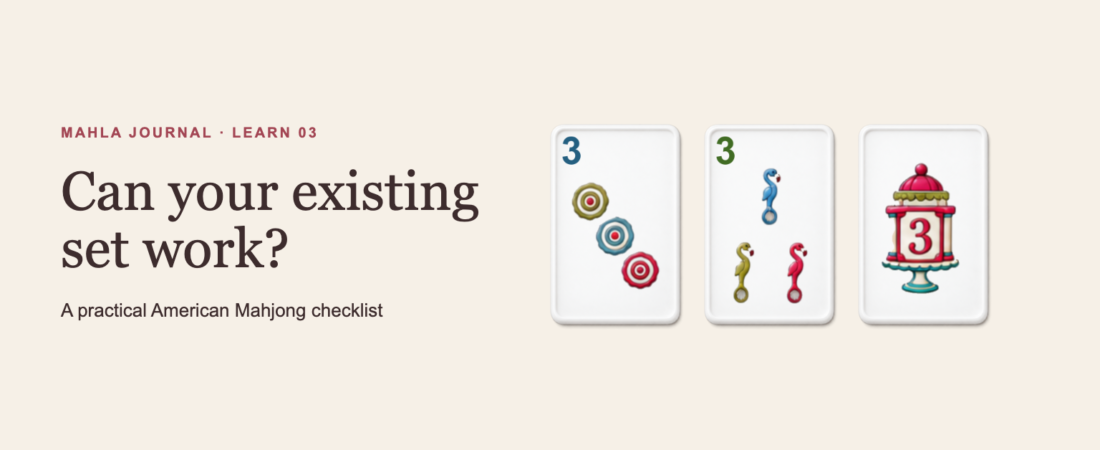
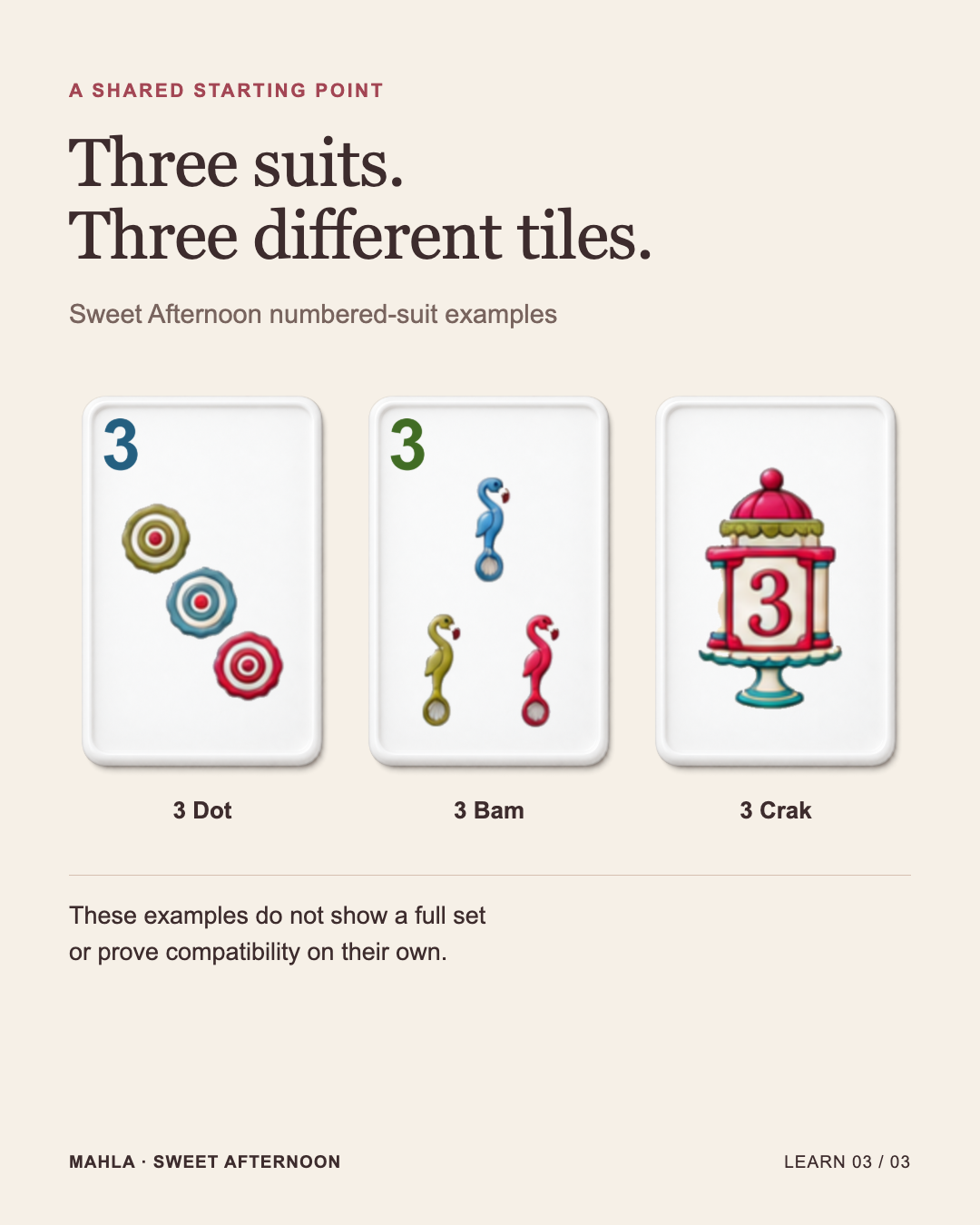
You can already practice recognizing the shared numbered suits with our Dots, Bams and Craks lesson. The Sweet Afternoon examples show three different identities with the same number.
Before your next game: sort, count and confirm. If the inventory and practical setup work for your table, you may be able to adapt your existing set. If they do not, you will have a precise list of what to replace or add.