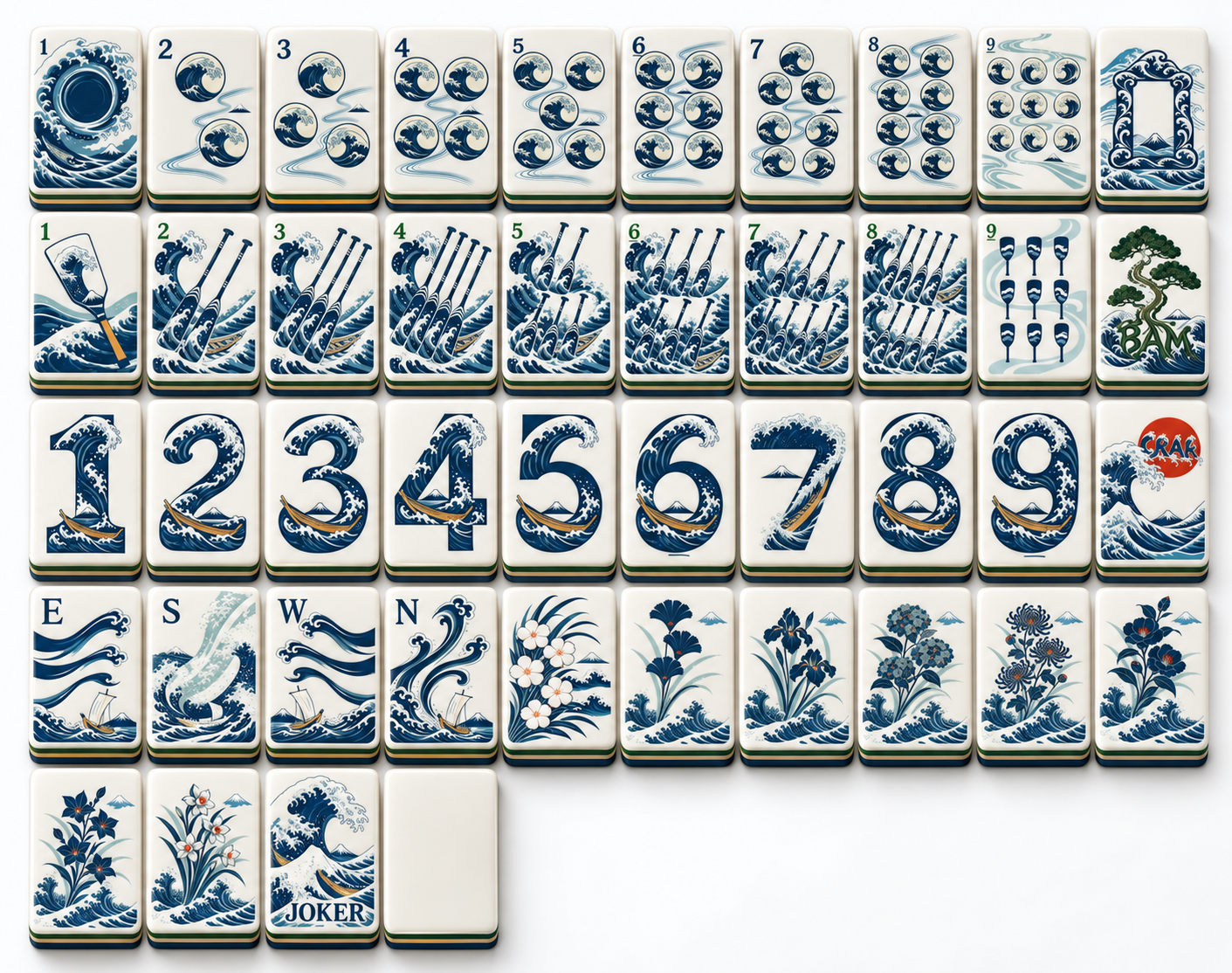
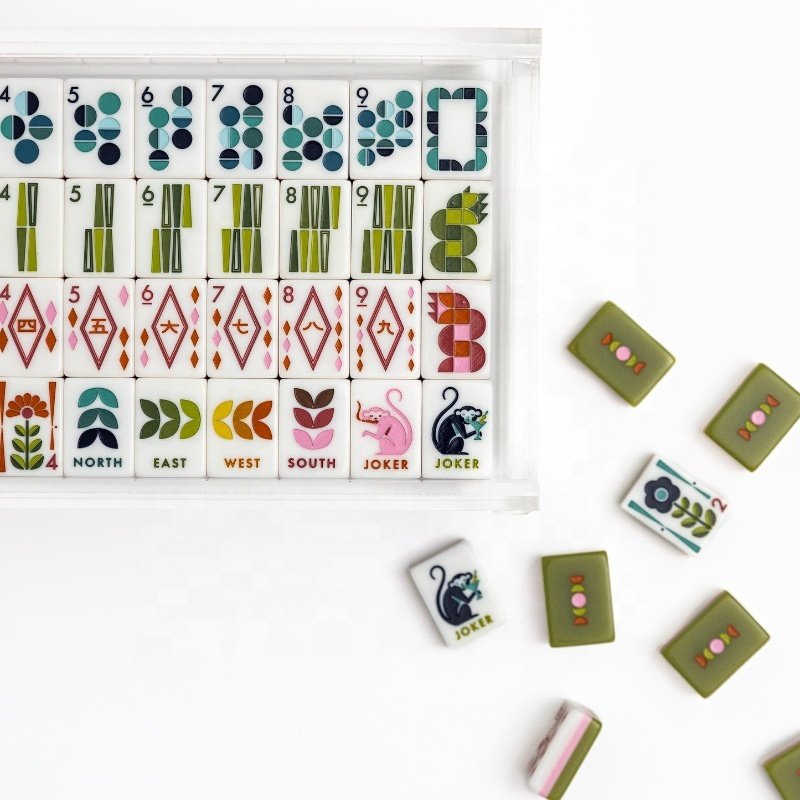

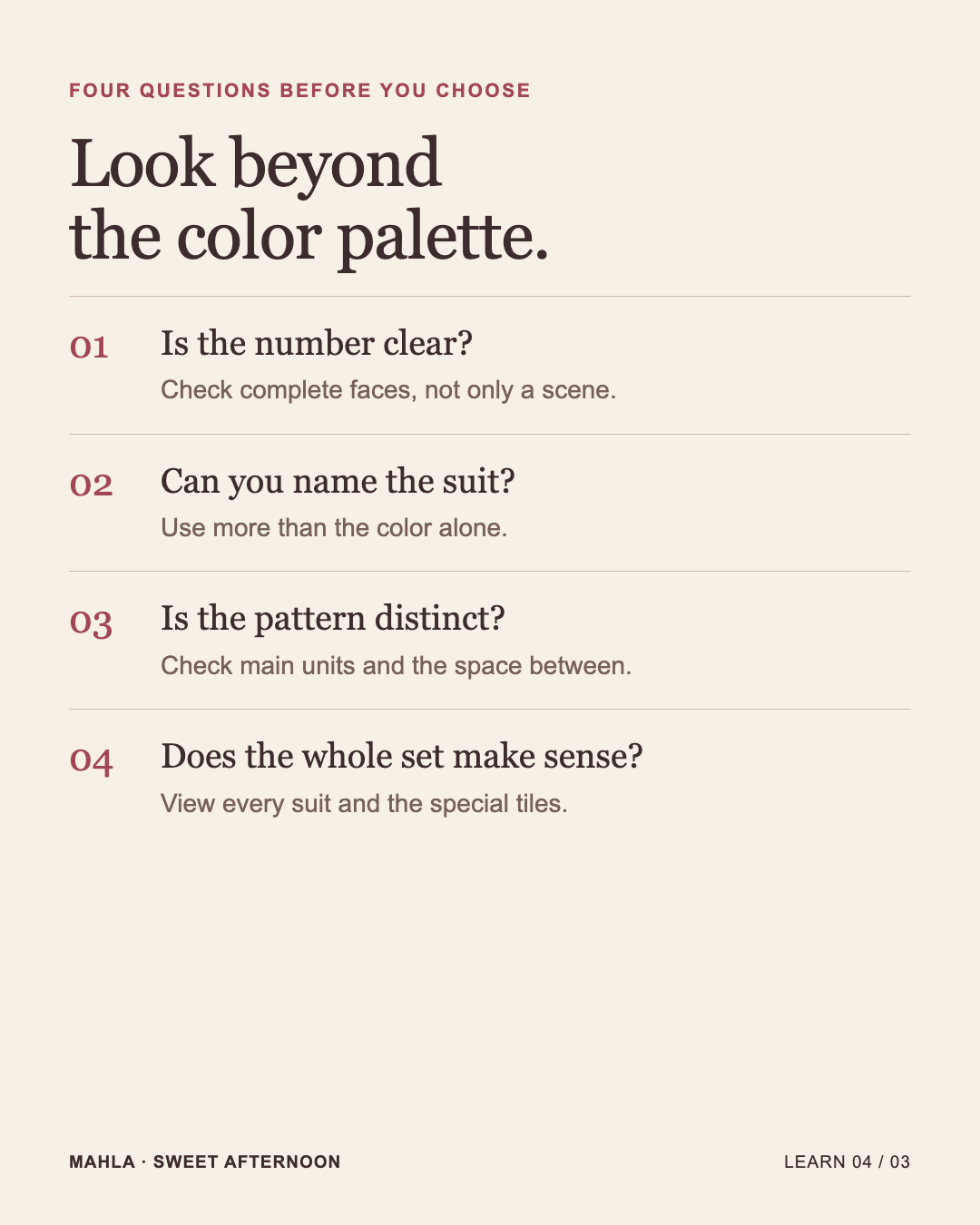
When choosing themed American Mahjong tiles, check whether you can name a tile’s number and suit without relying on its color alone. Then look at the main motifs, their spacing and the consistency of the rest of the set. A beautiful scene photograph is a useful introduction; complete face images help you make the choice.
Sweet Afternoon provides a small set of examples for these checks. The aim is to examine what you can actually see, rather than assume that decorative tiles are either difficult or effortless to learn.
1. Separate the number from the suit
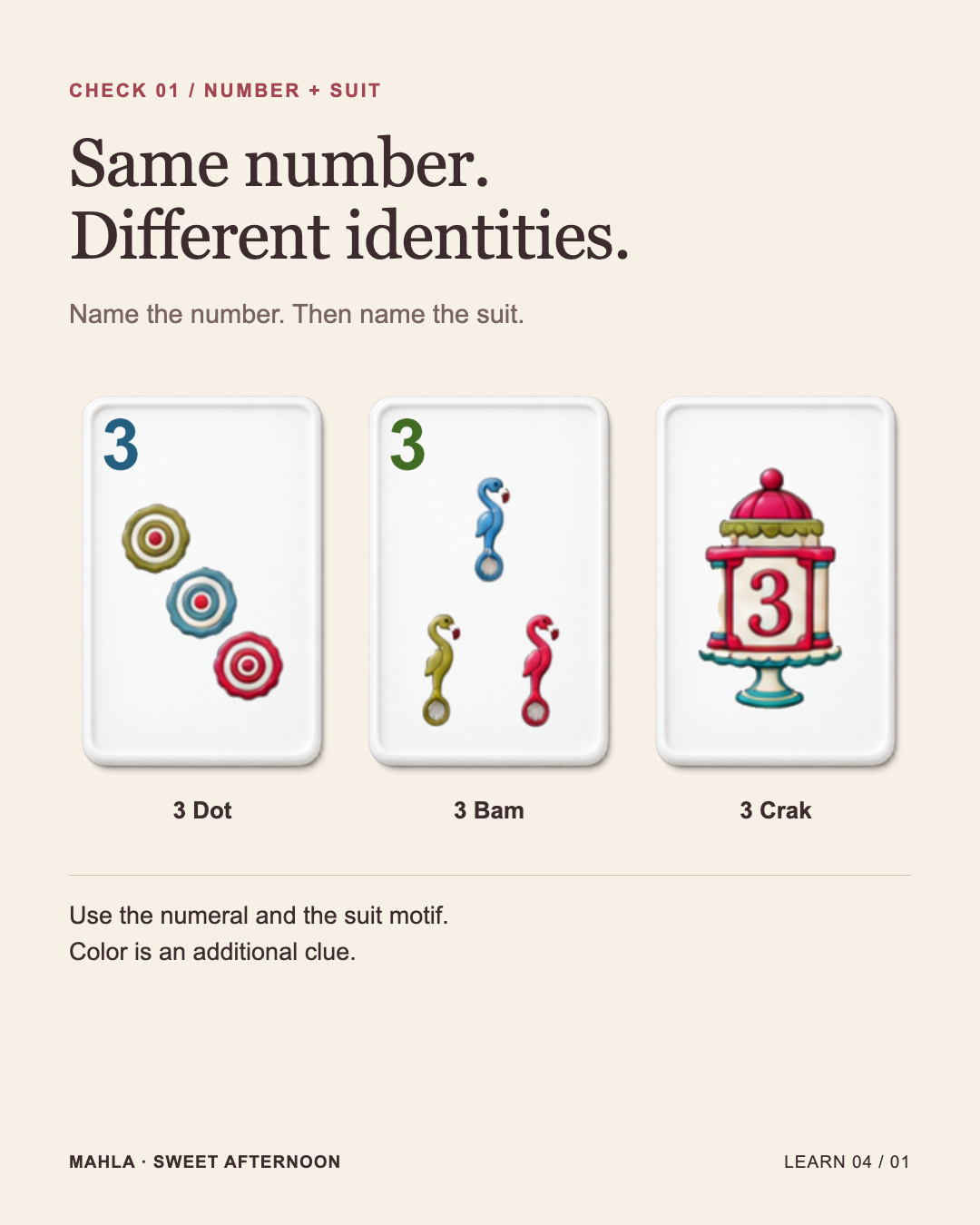
Start with three tiles bearing the same number. In these examples, three round motifs identify 3 Dot, three bird-shaped spoons identify 3 Bam, and the large 3 in the decorative centerpiece identifies 3 Crak. All are threes, but they are different tile identities.
Look for a readable numeral and a distinct suit motif. Color can help you organize a design, but it should not be the only clue: the bird-shaped spoons themselves use more than one color.
2. Count the main units, not every decorative detail
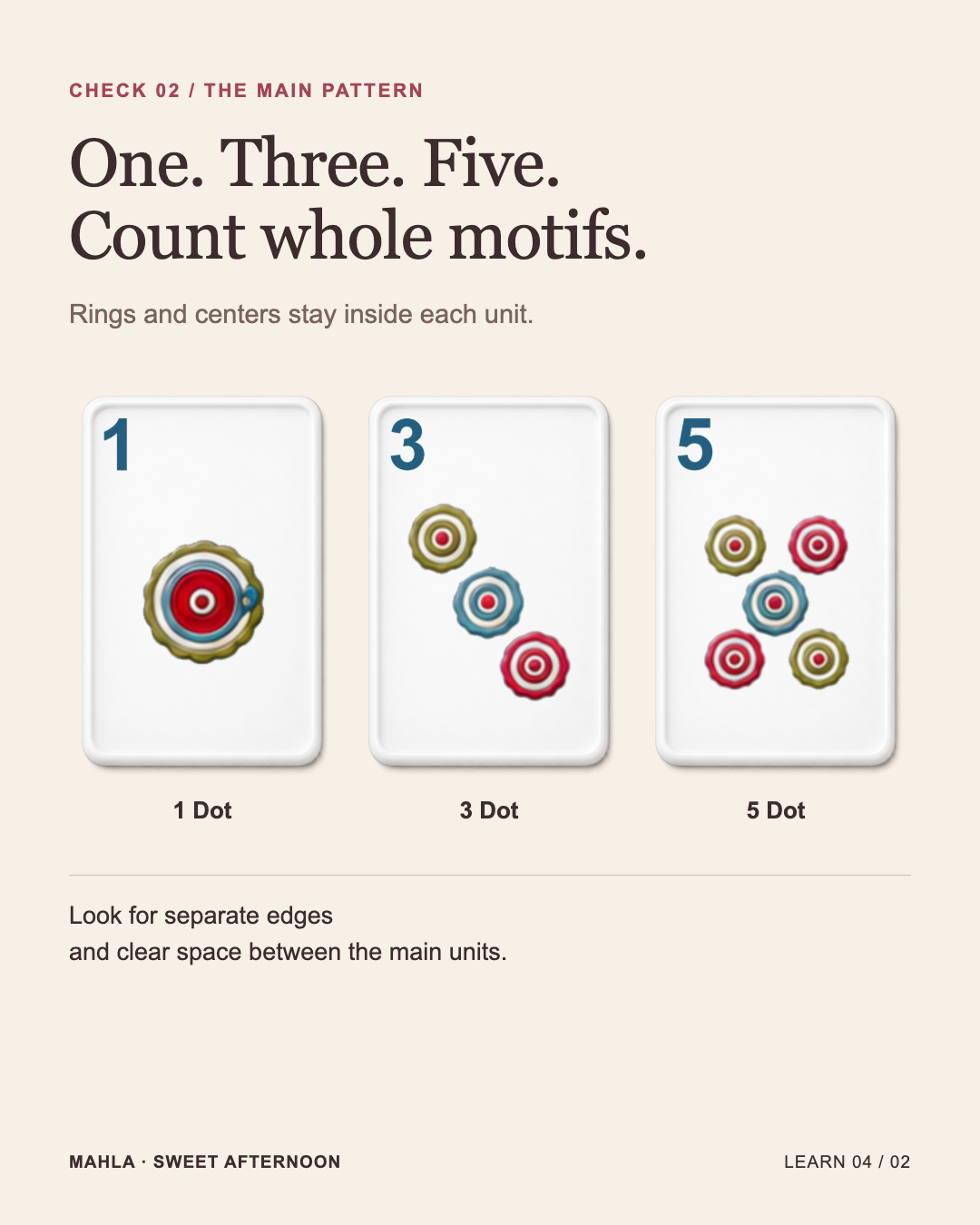
For Dots and Bams, look at the repeated units. Sweet Afternoon’s round Dot motifs contain rings and small centers. Those details belong to each motif; they do not add extra Dots.
Compare 1 Dot, 3 Dot and 5 Dot side by side. You are looking for one, three and five separate main motifs. Check that their edges and the spaces between them remain distinguishable. For Craks, use the numeral and the suit’s visual identity rather than expecting the decoration to repeat once per number.
3. Check a family, not just a favorite tile
Ask to see the full 1–9 range of each suit, plus the Winds, Dragons, Flowers and Jokers. A single close-up cannot show how consistently the whole set handles identification.
Within each family, look for a predictable visual vocabulary: clear numerals, recognizable suit cues and enough space around the main pattern. The exact layout can change with the number; the identifying clues should still make sense together.
4. Check the viewing conditions you will use
Look at complete faces at a comfortable viewing size, then examine the smaller preview. Does a numeral disappear into an ornament? Does reflected light cover an identifying mark? Can you still distinguish neighboring motifs?
Online images help you compare designs, but physical size, lighting and your own viewing needs matter at the table. If those details will decide your purchase, ask for measurements or a clear photograph in the conditions you need. Our tile-size guide is a useful next step.
A small comparison you can do now
Choose one same-number example from each suit and name each identity. Next, compare three ranks within one suit. Note which clues you used and where you needed a closer view. This is a practical way to describe your preferences to a seller or instructor; it is not a timed user test.
For the vocabulary, start with our first Dots, Bams and Craks lesson. To explore the design itself, see Sweet Afternoon. Choose a theme you enjoy, and give its full tile faces the same attention as the overall color palette.